All Categories
Featured
Compassionate Coverage Options for HIV Positive in 2026

Strategies for Managing Rates With Pre-Existing Illnesses
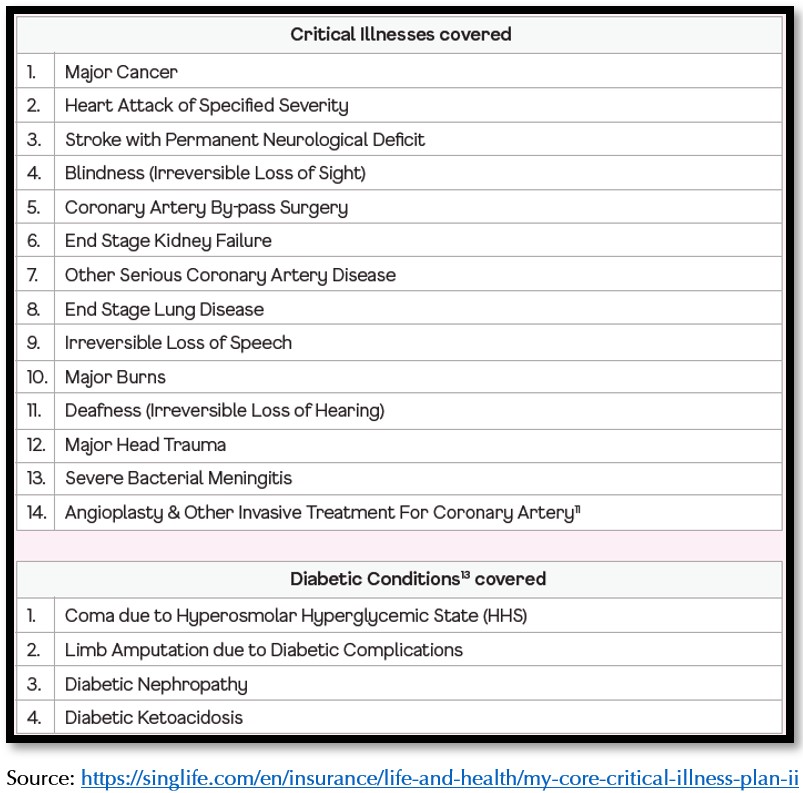
Comparing Current Policy Profiles for Impaired Conditions
Table of Contents
However, even these households may be concerned about future monetary problems or long-term diseases that may deplete their assets and reduce the funds readily available for the trust. Other families might have considerable retirement properties (examples: Individual retirement accounts, 401(k) strategies, and 403(b) accounts) that they are counting on to fund their SNTs.

Still other families of more modest means might have inadequate funds and other possessions with which to money their SNT and require to check out other options. Life insurance coverage has actually ended up being a typical response to the question of how to fund an SNT. Even for those with bigger estates, life insurance coverage can be an appealing funding source.
Veteran and Military InsuranceLife insurance coverage directed to an SNT can also supply flexibility to a household by providing effectively for the child with unique needs while allowing the parents to direct retirement assets or organization assets that may be inappropriate for an SNT to their other children. Life insurance is also a beneficial tool when moms and dads wish to leave a bigger share for the unique requirements child and smaller shares for his/her brother or sisters.
That is, the purpose of the insurance coverage is not to cover a finite set of requirements over a restricted time period, such as attending to a making it through spouse or spending for college educations in the occasion the wage earner in the family passes away. Instead, the SNT will last for the life of the kid with a disability, and the financing and cost of the premium need to be thought about.
Advanced Planning for Impaired Risk Insurance Needs
Therefore, an entire life policy or universal life policy with a guaranteed death advantage is recommended. The premiums for these kinds of policies, while at first more costly than the premiums for term policies, typically remain constant throughout the period of the policy. Moreover, oftentimes, the income that the policy produces by investing the premium payments can pay some or all of the premium, especially after the policy has remained in place for several years.
These policies cover two lives, generally, however not necessarily, the moms and dads' lives. The premiums on survivorship policies are lower than the premiums on a policy for a single person or on separate policies covering 2 individuals' lives since the policy just pays off after both of the insured individuals have actually died.
If effectively structured (as discussed listed below) the policy might even be "not available" for Medicaid purposes if one of the parents needs nursing home care in the future. Whatever type of insurance coverage is chosen, the policy needs to name the trustee of the SNT, in his or her capacity as trustee, as beneficiary of the policy, rather than calling either the trust itself or the private with special requirements.
Such trusts own, administer, and get profits from life insurance policies bought in the name of the rely on order to avoid the death benefit from being included in the estate of the insured individual for estate tax purposes. Individuals frequently erroneously presume that life insurance is not taxable. While it holds true that the proceeds of a policy are not taxable for income tax purposes, they are taxable for estate tax purposes.
Such irreversible life insurance coverage trusts can be collaborated with SNTs by making an SNT the supreme beneficiary of the irrevocable life insurance trust. A life insurance policy owned by an irreversible life insurance coverage trust might not be thought about a disqualifying asset for Medicaid functions if the guaranteed person needs long-lasting care him or herself in the future.
Comparing 2026 Risk Assessments for Impaired Conditions
Drafters of irrevocable life insurance trusts often make a typical error when the trust is meant to serve unique needs recipients: the inclusion of so-called "Crummey" powers in the trust instrument. (This odd nameCrummeycomes from a court case that authorized such powers.) Crummey powers enable the trust recipients a specific limited amount of time to withdraw contributions made to the trust.
Trust recipients who have these Crummey withdrawal rights purposefully and generally do not exercise them, and then the trustee utilizes the present to pay the insurance premium. However, if the life insurance trust is to work as an SNT for a recipient who is getting Supplemental Security Income (SSI) from the Social Security Administration, such Crummey powers can trigger a disaster.
It will then enforce a duration of disqualification on the SSI recipient. For this factor, it is advisable not to give withdrawal rights to an SNT beneficiary getting means-tested benefits like SSI or Medicaid. Restricting the withdrawal rights to non-disabled beneficiaries (usually other children) is typically sufficient for gift tax purposes and, if not, the present can be credited versus the donor's lifetime gift tax exemption (likewise $5,120,000 in 2012).

Latest Posts

Compassionate Coverage Options for HIV Positive in 2026

Empathy-Driven Guidance for Complex Underwriting Cases
Essential Strategies for High Risk Travel Coverage